Brushing should not be a fight.
There’s a better way to make brushing easier.
A four-minute read for parents of toddlers and young children
Swipe through the guide
Eight slides. Save them for tonight, or read the full guide below.
They are not fighting the toothbrush.
Somewhere between one and three, a child works out that their body is theirs. Brushing is one of the few things they can refuse.
Which means the problem is almost never the brush, the flavour or the technique. It is control. Give them some back and most of the fight goes.
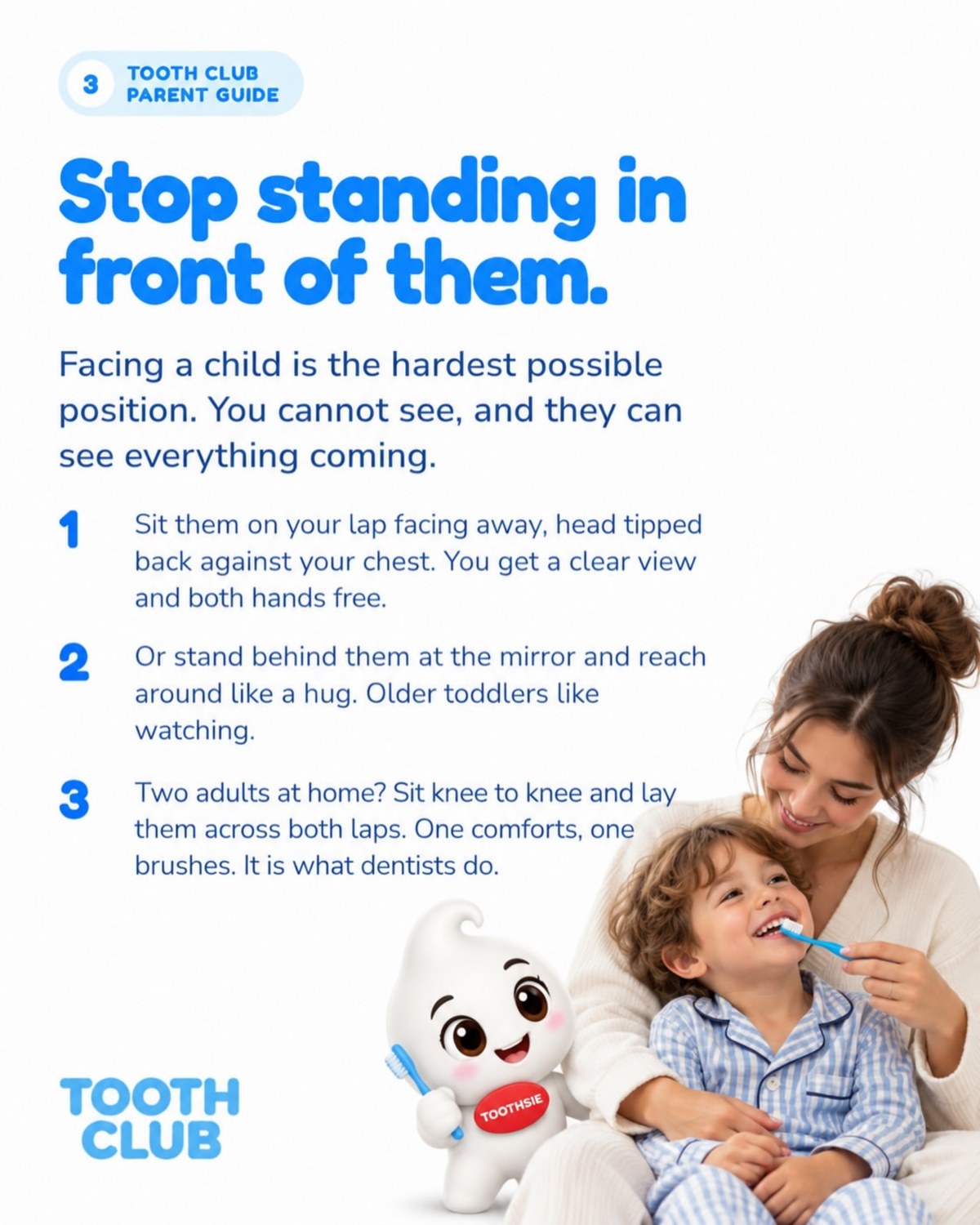
Stop standing in front of them.
Facing a child is the hardest possible position. You cannot see, and they can see everything coming.
- 1Sit them on your lap facing away, head tipped back against your chest. You get a clear view and both hands free.
- 2Or stand behind them at the mirror and reach around like a hug. Older toddlers like watching.
- 3Two adults at home? Sit knee to knee and lay them across both laps. One comforts, one brushes. It is what dentists do.
Give away the choices that do not matter.
Whether they brush is not up for discussion. Almost everything else can be.
- ✓Which toothbrush. Let them pick it at the shop and it stops being yours.
- ✓Which song, and therefore how long it lasts.
- ✓Who goes first. They brush, then you finish the job properly.
- ✓Standing or sitting, bathroom or bedroom. None of it changes the outcome.
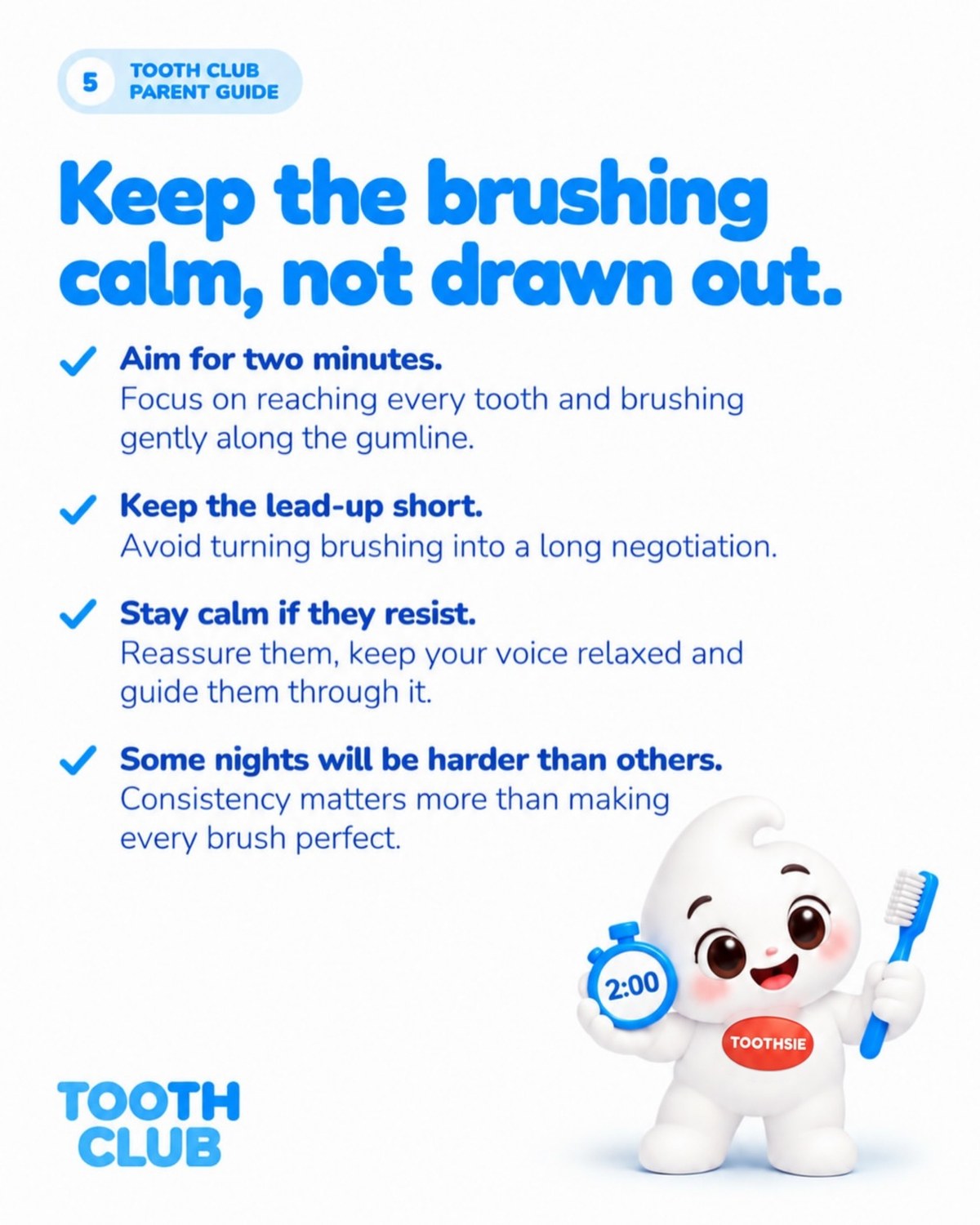
Keep the brushing calm, not drawn out.
- ✓Aim for two minutes. Focus on reaching every tooth and brushing gently along the gumline.
- ✓Keep the lead-up short. Avoid turning brushing into a long negotiation.
- ✓Stay calm if they resist. Reassure them, keep your voice relaxed and guide them through it.
- ✓Some nights will be harder than others. Consistency matters more than making every brush perfect.
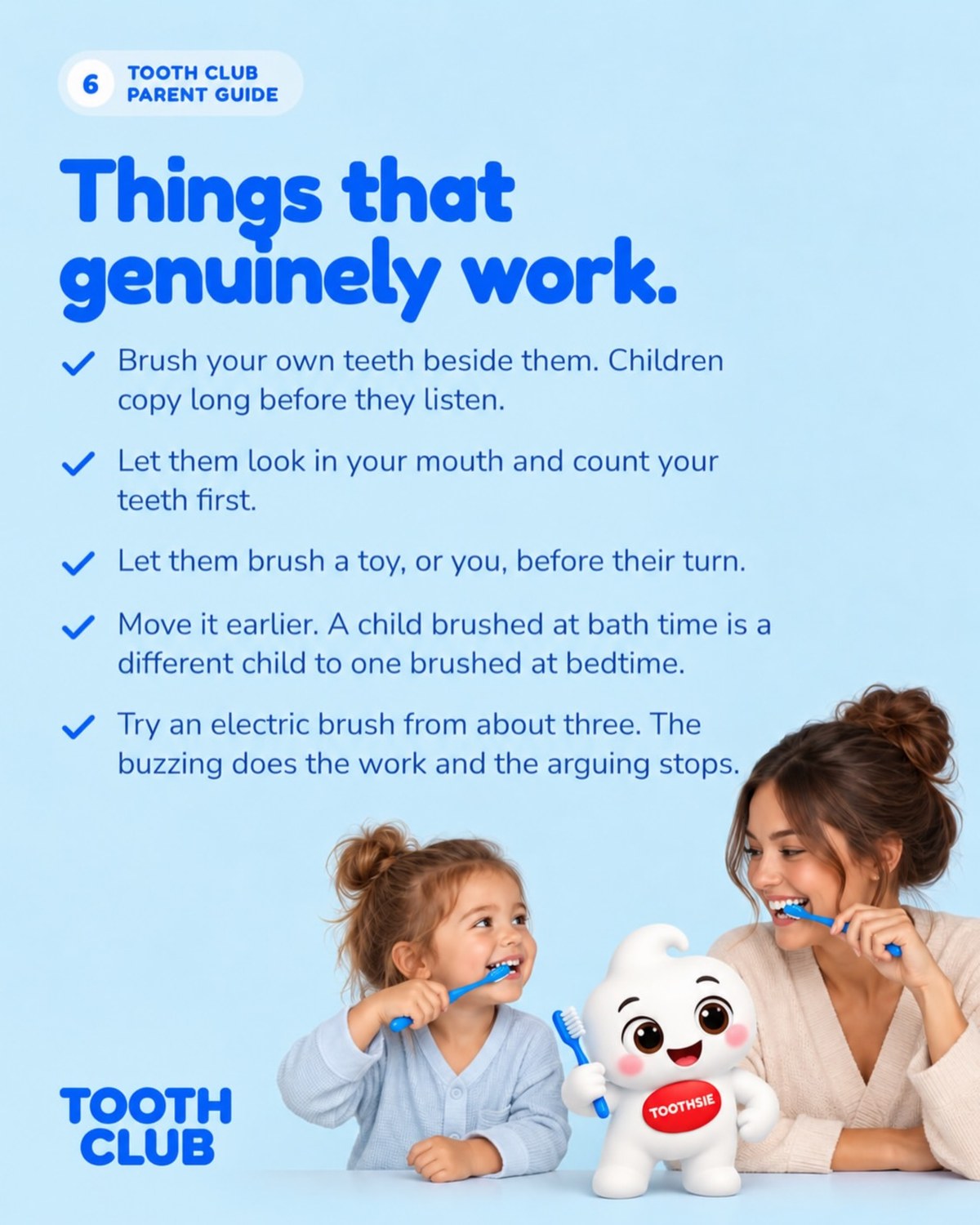
Things that genuinely work.
- ✓Brush your own teeth beside them. Children copy long before they listen.
- ✓Let them look in your mouth and count your teeth first.
- ✓Let them brush a toy, or you, before their turn.
- ✓Move it earlier. A child brushed at bath time is a different child to one brushed at bedtime.
- ✓Try an electric brush from about three. The buzzing does the work and the arguing stops.
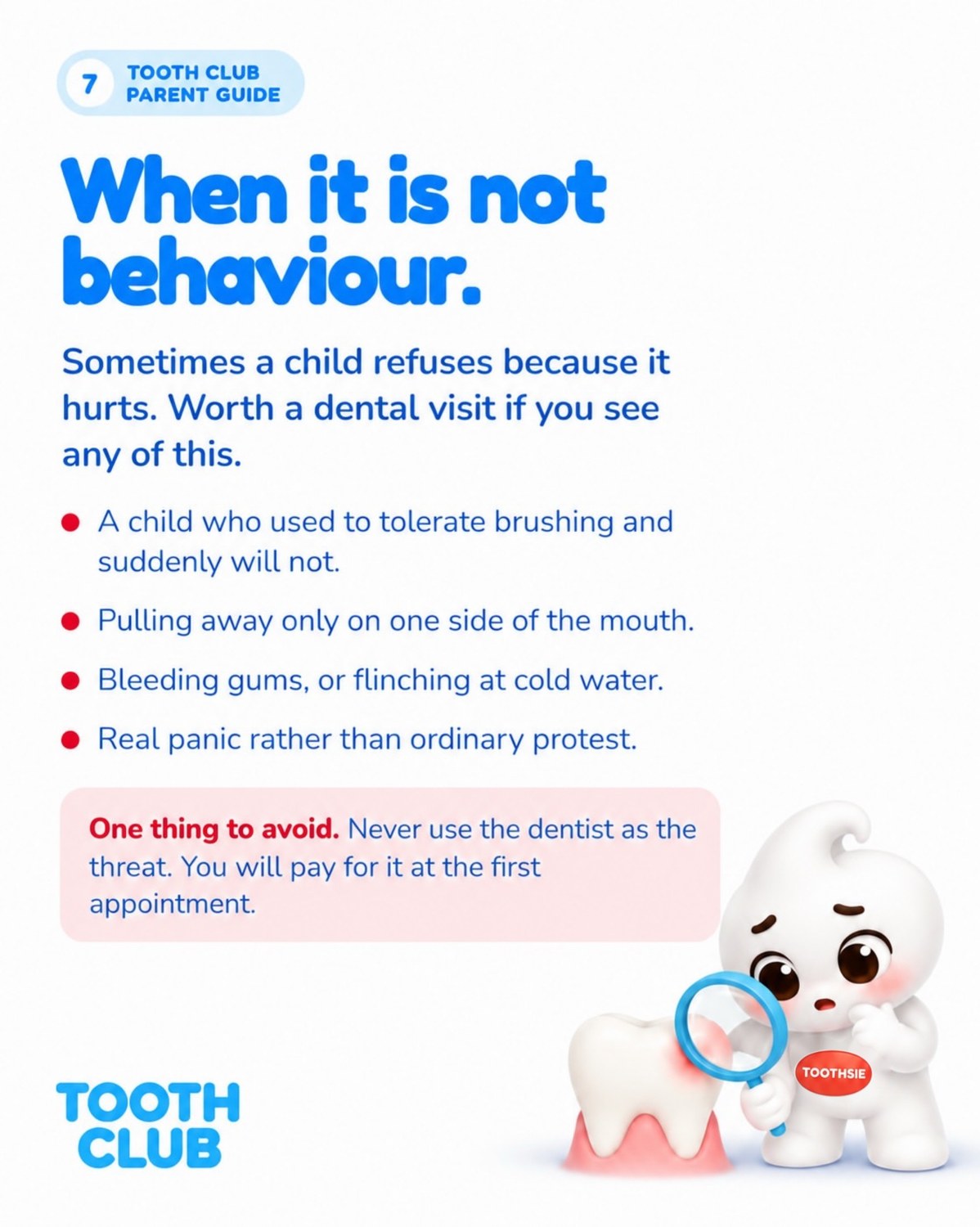
When it is not behaviour.
Sometimes a child refuses because it hurts. It is worth a dental visit if you see any of this:
- A child who used to tolerate brushing and suddenly will not.
- Pulling away only on one side of the mouth.
- Bleeding gums, or flinching at cold water.
- Real panic rather than ordinary protest.
One thing to avoid. Never use the dentist as the threat. You will pay for it at the first appointment.
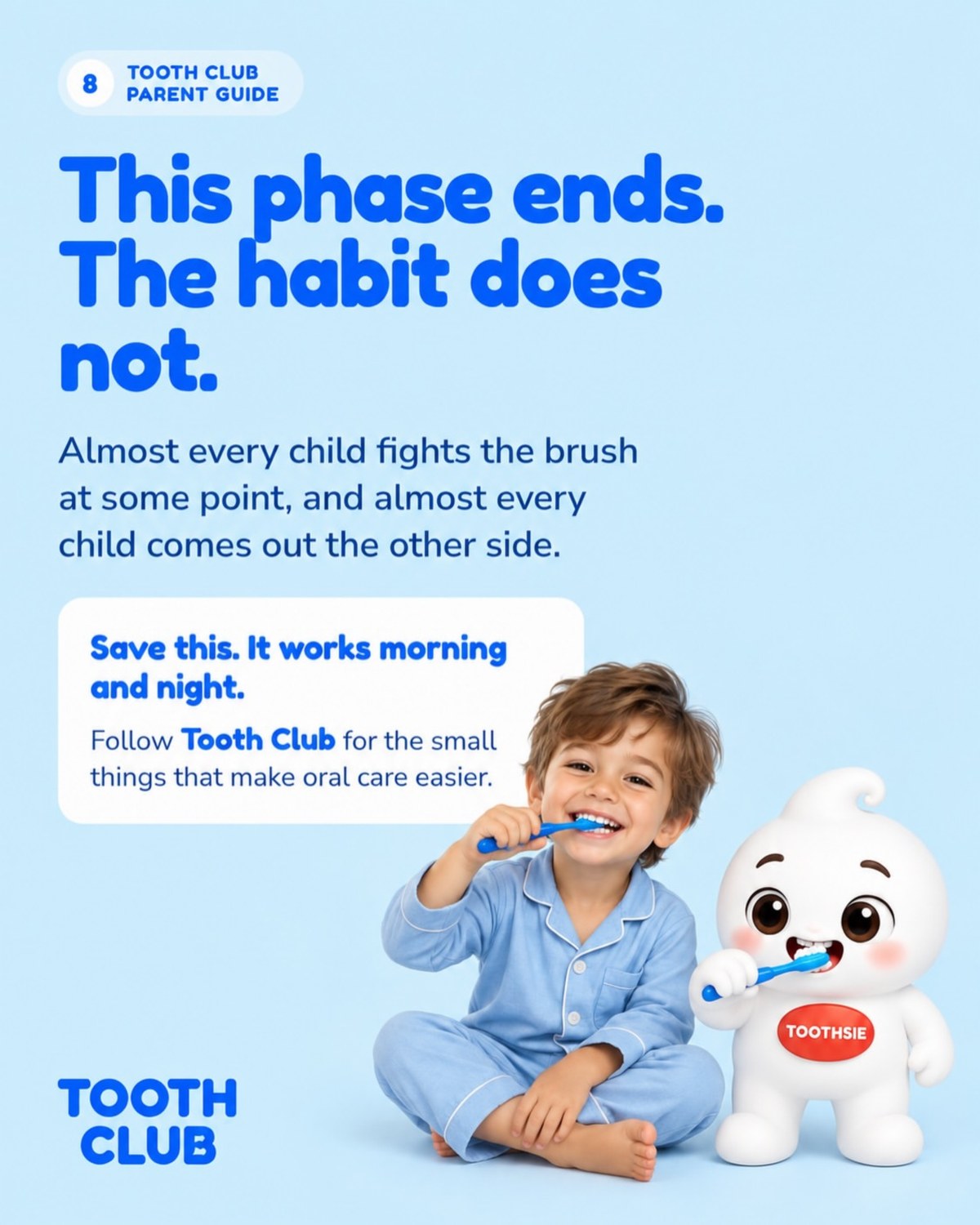
This phase ends. The habit does not.
Almost every child fights the brush at some point, and almost every child comes out the other side. Save this guide. It works morning and night.
Make tonight easier with the free Star Book
For grown-ups only. We never ask children for their details.
More Parent Guides
This guide is general information for parents. It isn’t a substitute for advice from your child’s dentist.
Back to the Parent Guide