 STAGE ONE
Smooth and even.
Healthy teeth look whitish and smooth all the way down to the gum, with no band or patch of colour where the two meet. Gums are pale pink and firm.
Nothing to do. Keep brushing morning and night.
You can see it long before your child can feel it.
A five-minute read for parents

Decay in baby teeth can take hold in a matter of months, and a child will usually say nothing until it reaches the nerve.
Caught at the very first stage, it can often be stopped and reversed with preventive treatment. That window is the whole reason to look.
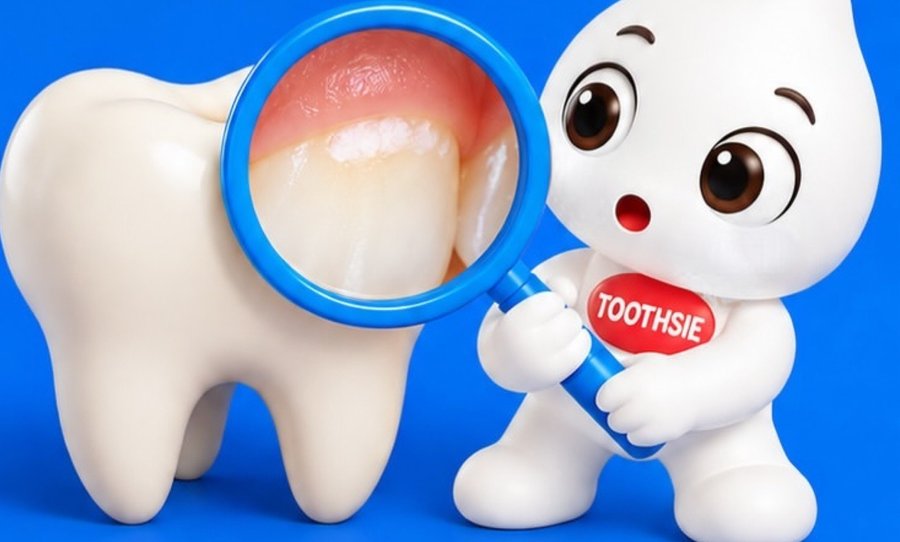
Ten seconds, once a month. Here’s a simple check you can do at home.

Three stages, from healthy to needing a dentist promptly.
STAGE ONEHealthy teeth look whitish and smooth all the way down to the gum, with no band or patch of colour where the two meet. Gums are pale pink and firm.
Nothing to do. Keep brushing morning and night.
 STAGE TWO
A chalky, opaque band running along the gum line on the top front teeth. It is the very first sign of decay, and it is the one almost every parent walks past.
Book a dental visit. At this stage it can often be reversed.
 STAGE THREE
The band has darkened, or there are dark spots and softened, crumbling edges. The enamel has broken down and this will not repair on its own.
See a dentist promptly. Do not wait for it to hurt.
Guidance drawn from the Lift the Lip screening tool used by state dental services and the RACGP Red Book.

Most early decay is found by a parent who simply knew to look. Now you do.

This guide is general information for parents. It isn’t a diagnosis. If you notice any change in your child’s teeth, ask your dentist.
Back to the Parent Guide