The first wobbly tooth.
A big moment. Here is what is normal.
A four-minute read for parents

Swipe through the guide
Eight slides. Save them for when the first one goes, or read the full guide below.
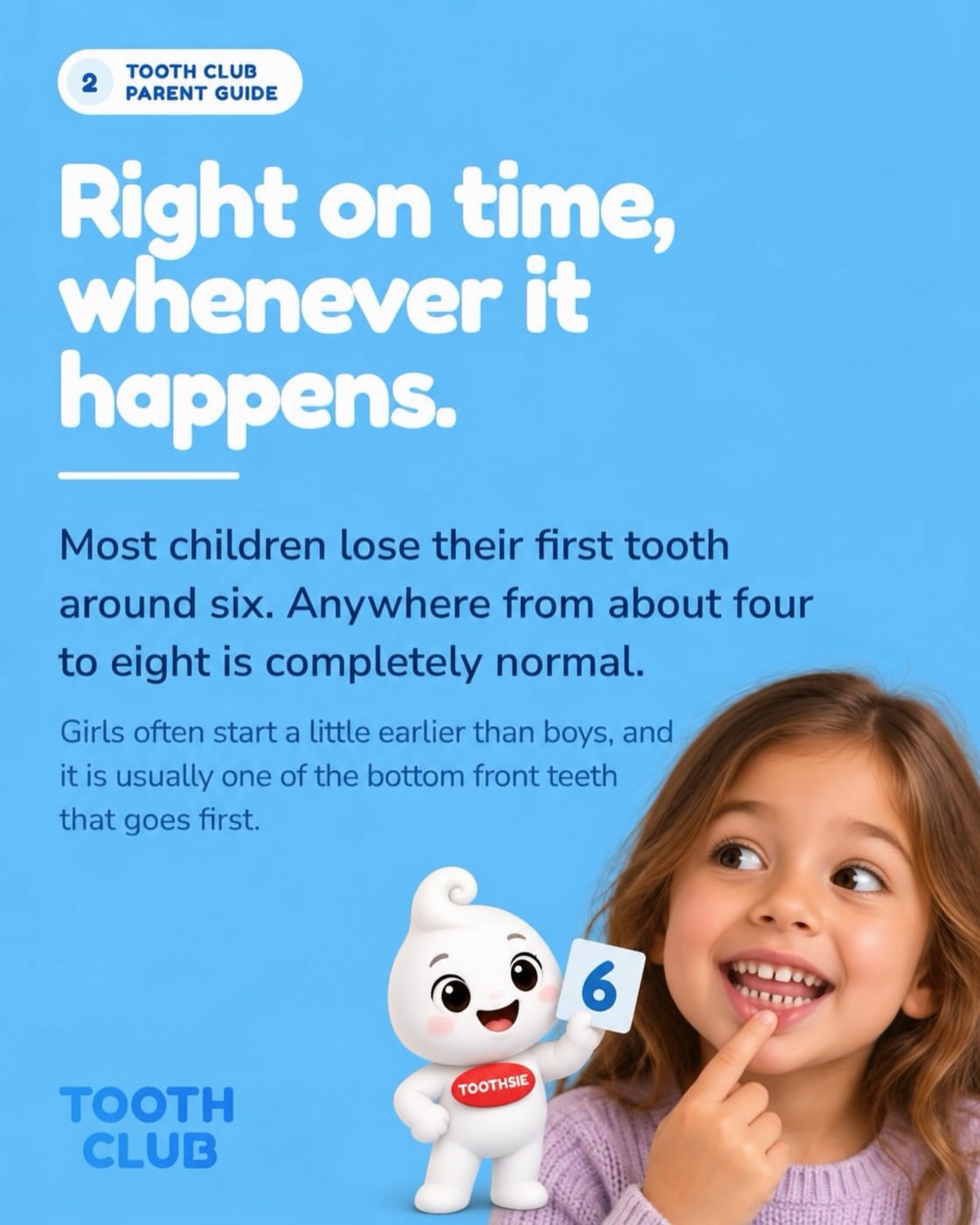
Right on time, whenever it happens.
Most children lose their first tooth around six. Anywhere from about four to eight is completely normal.
Girls often start a little earlier than boys, and it is usually one of the bottom front teeth that goes first.
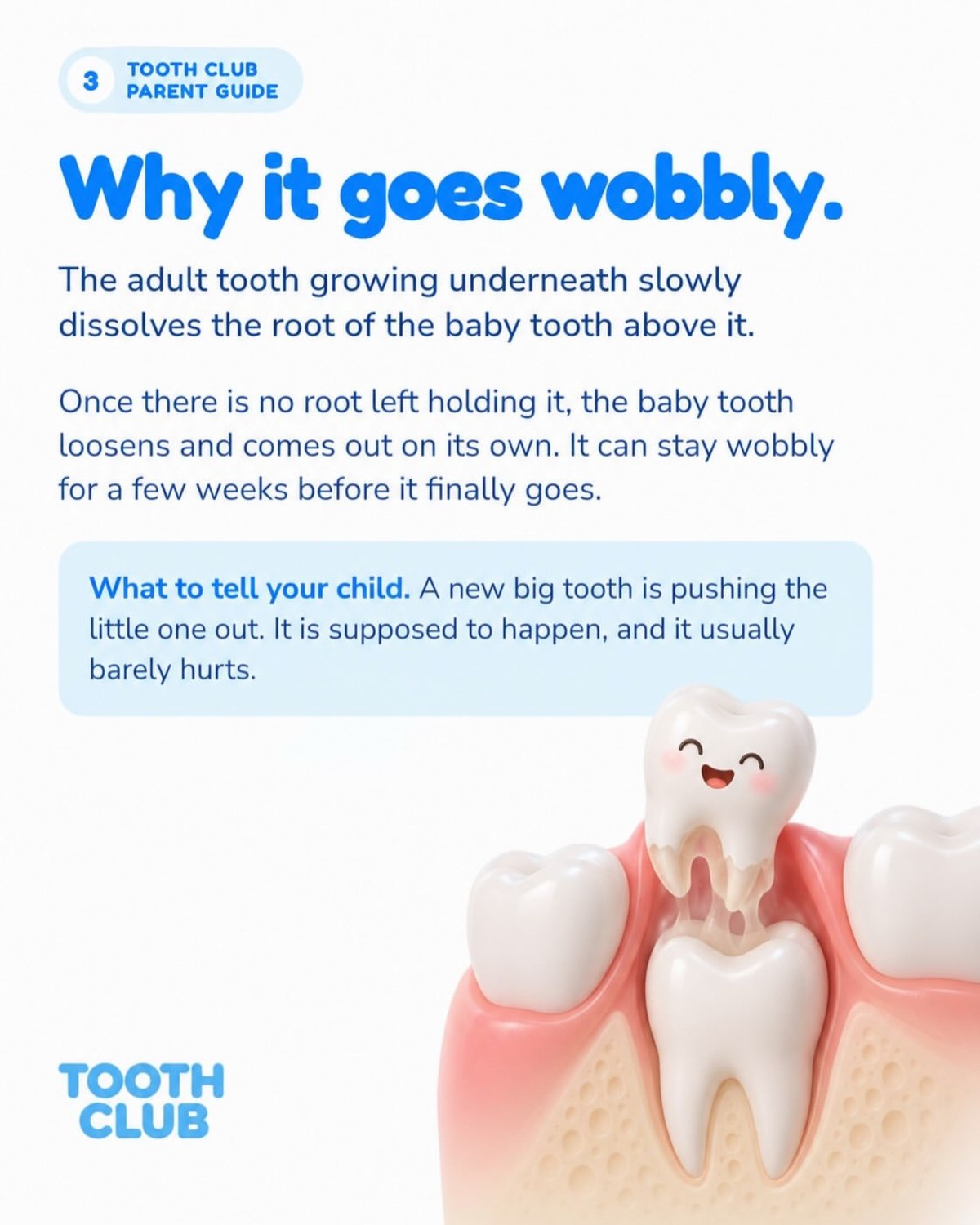
Why it goes wobbly.
The adult tooth growing underneath slowly dissolves the root of the baby tooth above it.
Once there is no root left holding it, the baby tooth loosens and comes out on its own. It can stay wobbly for a few weeks before it finally goes.
What to tell your child. A new big tooth is pushing the little one out. It is supposed to happen, and it usually barely hurts.
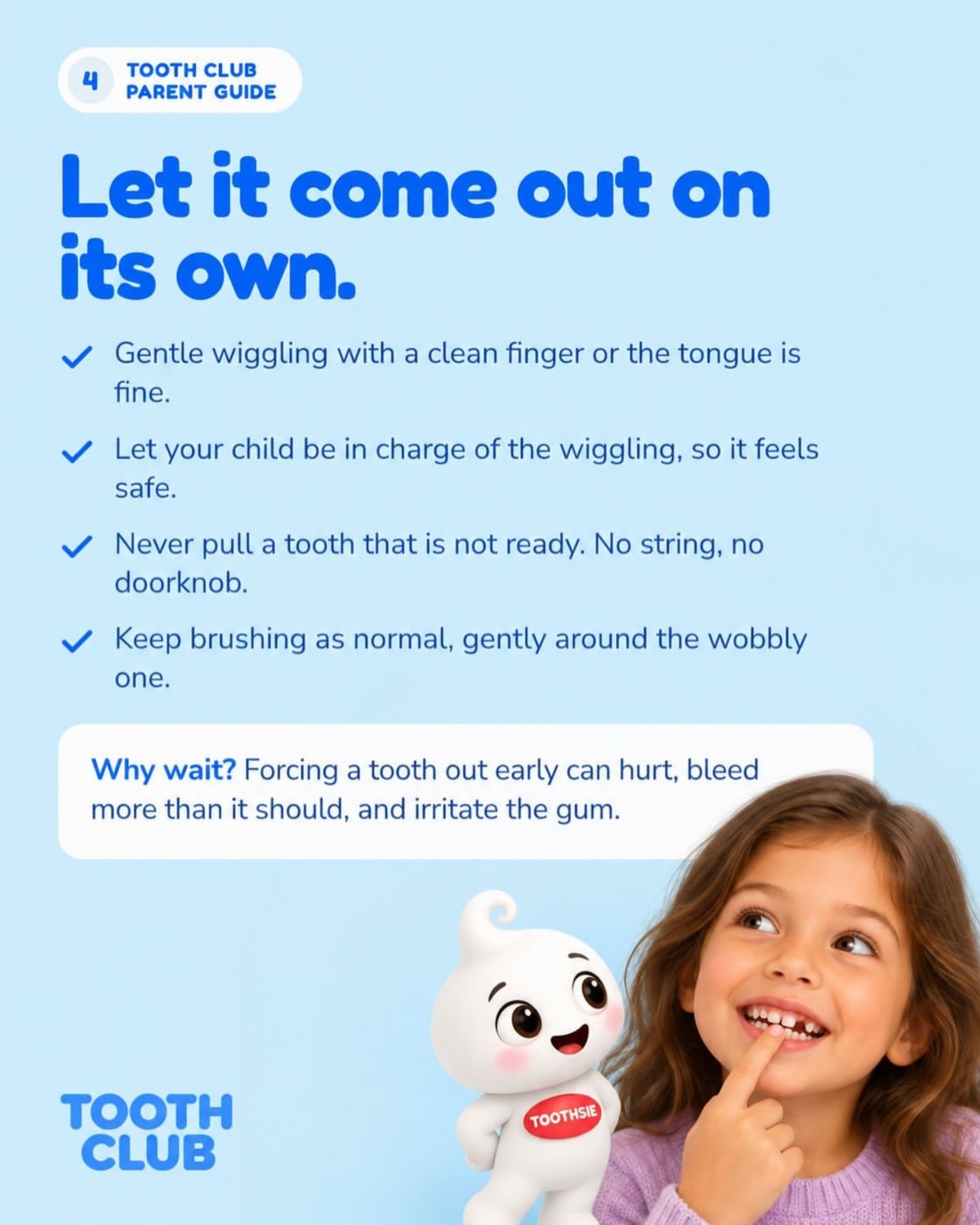
Let it come out on its own.
- ✓Gentle wiggling with a clean finger or the tongue is fine.
- ✓Let your child be in charge of the wiggling, so it feels safe.
- ✓Never pull a tooth that is not ready. No string, no doorknob.
- ✓Keep brushing as normal, gently around the wobbly one.
Why wait? Forcing a tooth out early can hurt, bleed more than it should, and irritate the gum.
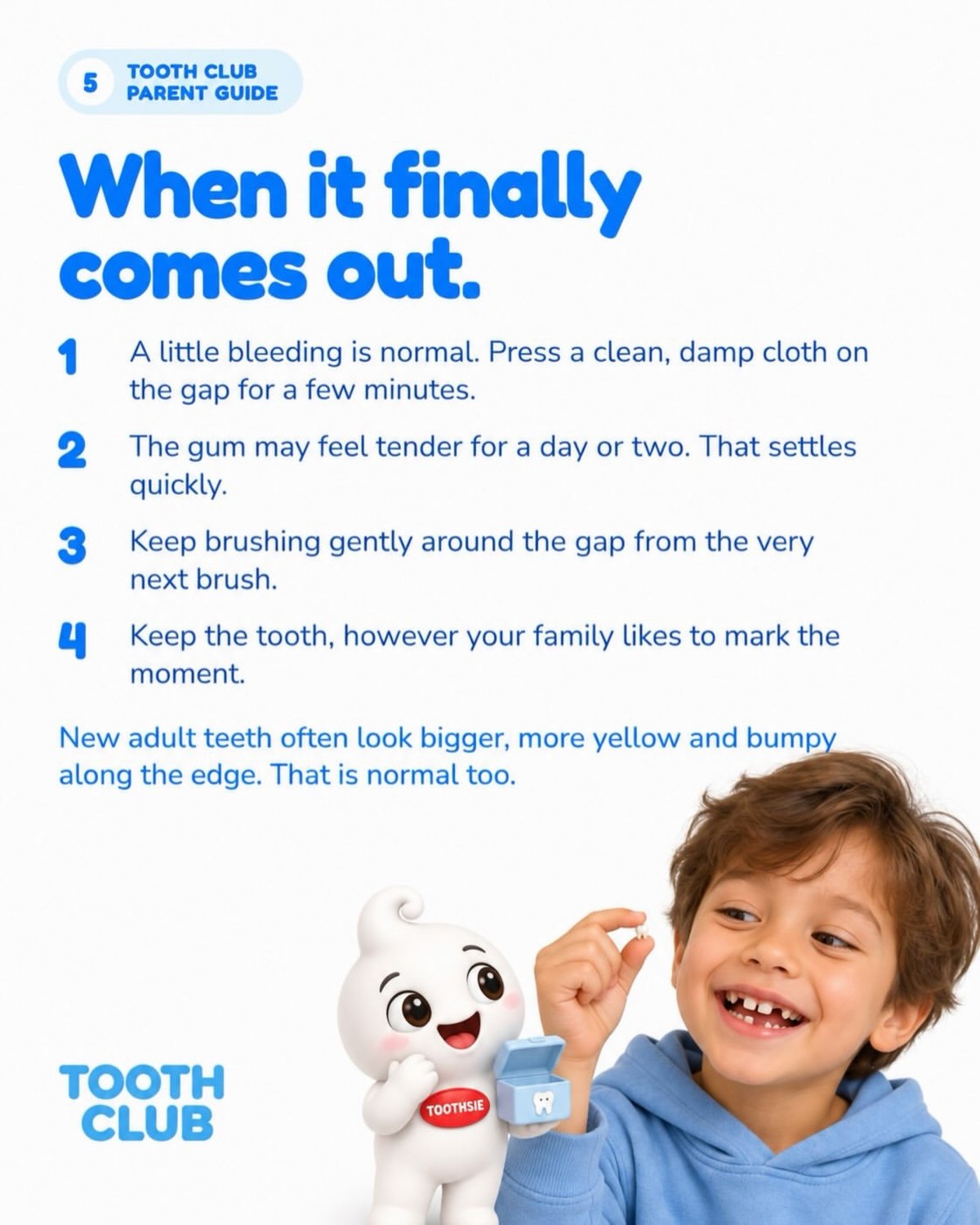
When it finally comes out.
- 1A little bleeding is normal. Press a clean, damp cloth on the gap for a few minutes.
- 2The gum may feel tender for a day or two. That settles quickly.
- 3Keep brushing gently around the gap from the very next brush.
- 4Keep the tooth, however your family likes to mark the moment.
New adult teeth often look bigger, more yellow and bumpy along the edge. That is normal too.
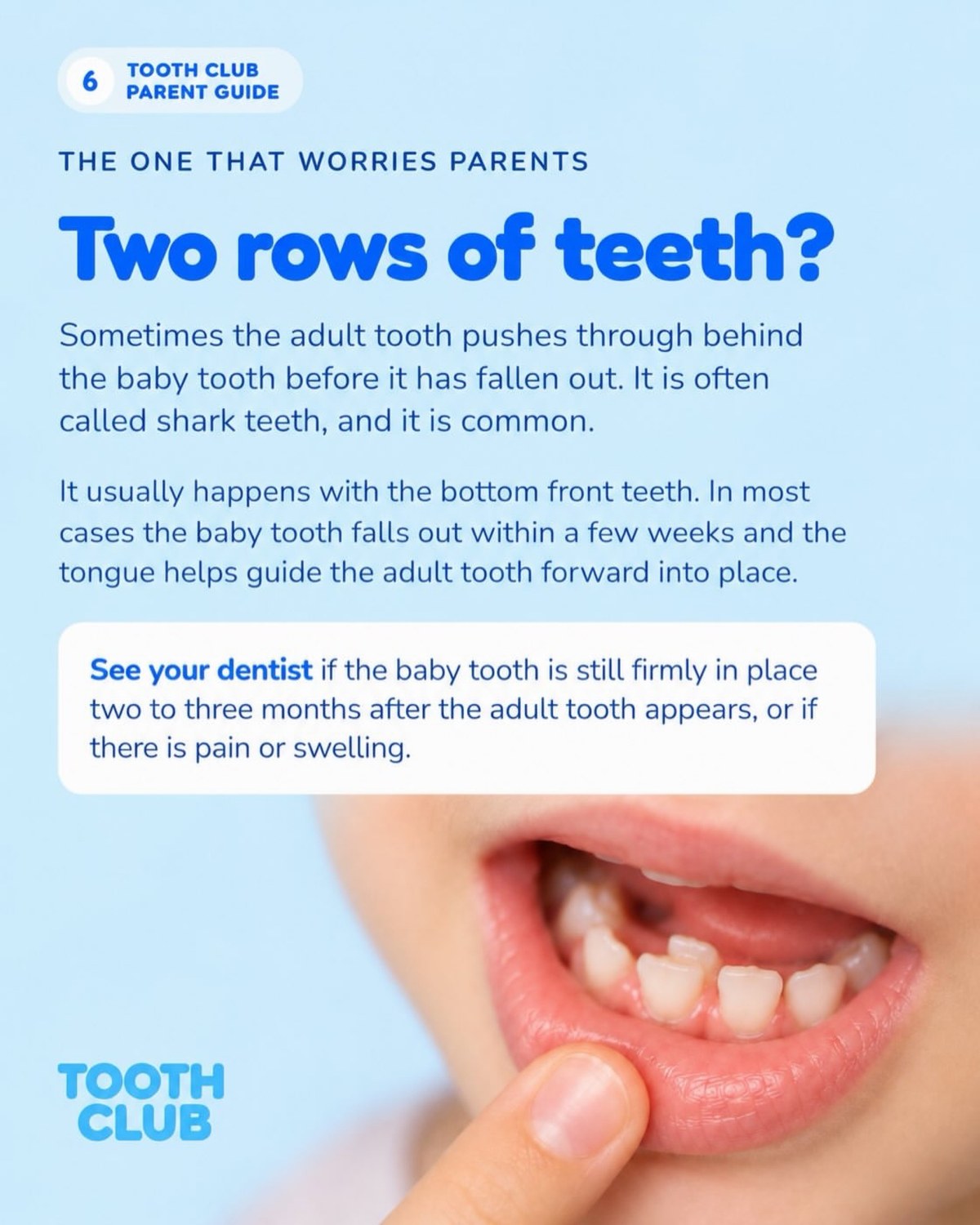
Two rows of teeth?
Sometimes the adult tooth pushes through behind the baby tooth before it has fallen out. It is often called shark teeth, and it is common.
It usually happens with the bottom front teeth. In most cases the baby tooth falls out within a few weeks and the tongue helps guide the adult tooth forward into place.
See your dentist if the baby tooth is still firmly in place two to three months after the adult tooth appears, or if there is pain or swelling.
When to check with your dentist.
- Nothing has gone wobbly by around eight.
- A tooth comes out well before four, or because of decay or an injury.
- An adult tooth is coming through in an unusual place.
- There is ongoing pain, swelling or a gum that will not settle.
A tooth lost early can leave a gap the teeth beside it drift into. A dentist can sometimes hold that space open. Not sure where to start? Read the first dental visit.
Timings from the Better Health Channel. General information only, not a substitute for professional care.
Make it a moment.
The first lost tooth is one of the first real signs of growing up. However your family celebrates it, it is worth celebrating.
Pair it with the free Star Book
For grown-ups only. We never ask children for their details.
More Parent Guides
This guide is general information for parents. It isn’t a substitute for advice from your child’s dentist.
Back to the Parent Guide